
If you’ve been told you have a herniated disc, you probably already know the pain that comes with it — the sharp catch in your lower back, the burning that shoots down one leg, or the ache that makes it impossible to sit through a workday. Maybe you’ve been handed a referral for surgery, or told to rest and wait it out. Neither option feels great.
A lot of people in Denton, and in nearby communities like Flower Mound, Argyle, and Corinth, start asking a pretty reasonable question at this point: Can chiropractic care actually help with this?
The honest answer is: for many people, yes — but the details matter.
What a Herniated Disc Actually Is
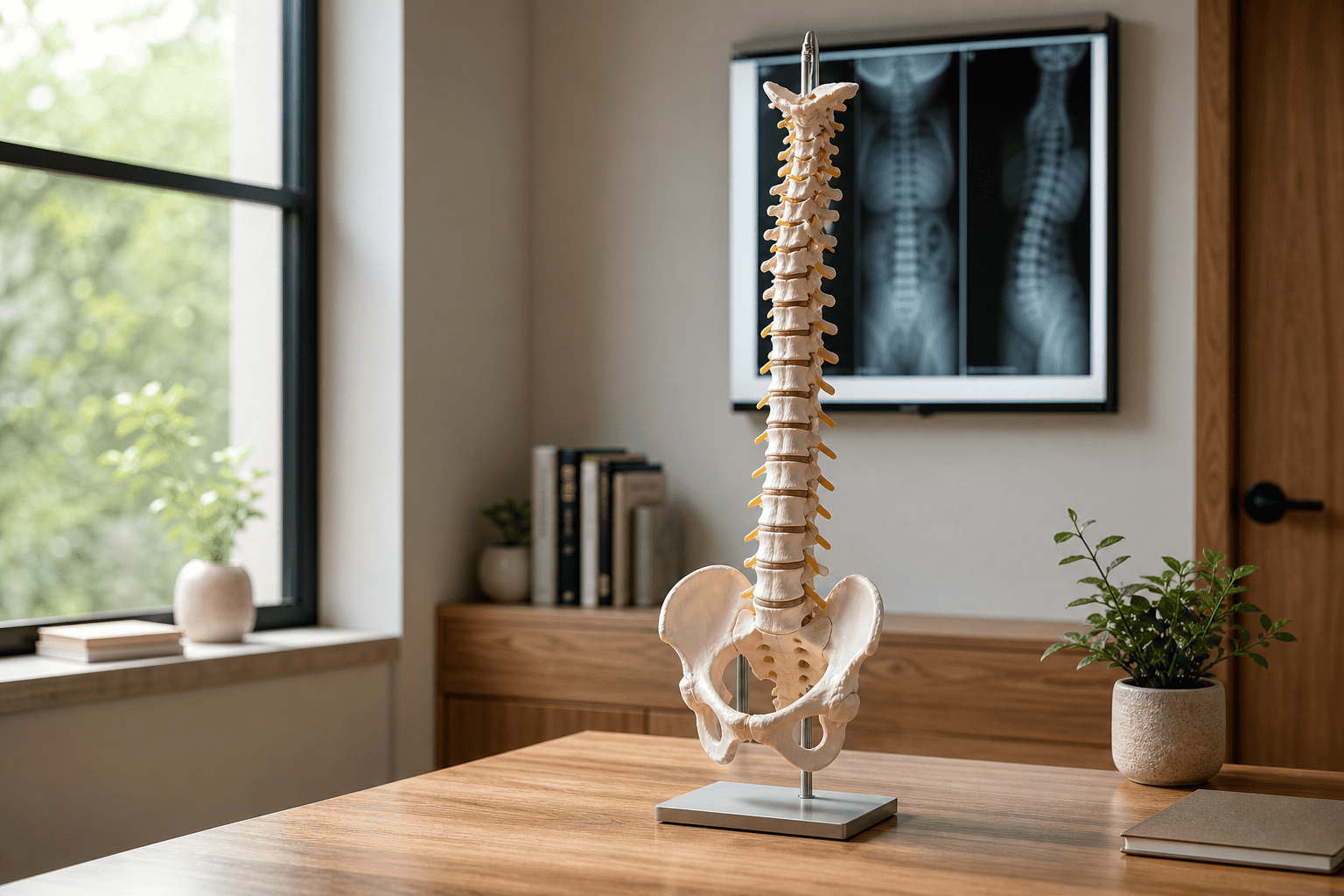
Your spine is made up of vertebrae (the bones) stacked on top of each other, with soft discs in between that act as cushions and shock absorbers. Each disc has a tough outer shell called the annulus fibrosus and a gel-like center called the nucleus pulposus. When the outer shell develops a crack or weakens, that inner gel can push outward — that’s a herniation.
When that bulging disc presses on a nearby nerve, things get uncomfortable fast. You might feel pain, numbness, tingling, or weakness — sometimes right at the disc level, sometimes radiating all the way into your leg (that’s often called sciatica).
What Chiropractic Care Can Do
Chiropractic adjustments can help reduce stress around a herniated disc, improve mobility, and calm muscle spasm. But in my experience, that relief is often temporary because adjustments don’t directly address the damaged disc itself.
That was the pattern I saw in disc case after disc case before I discovered spinal decompression.
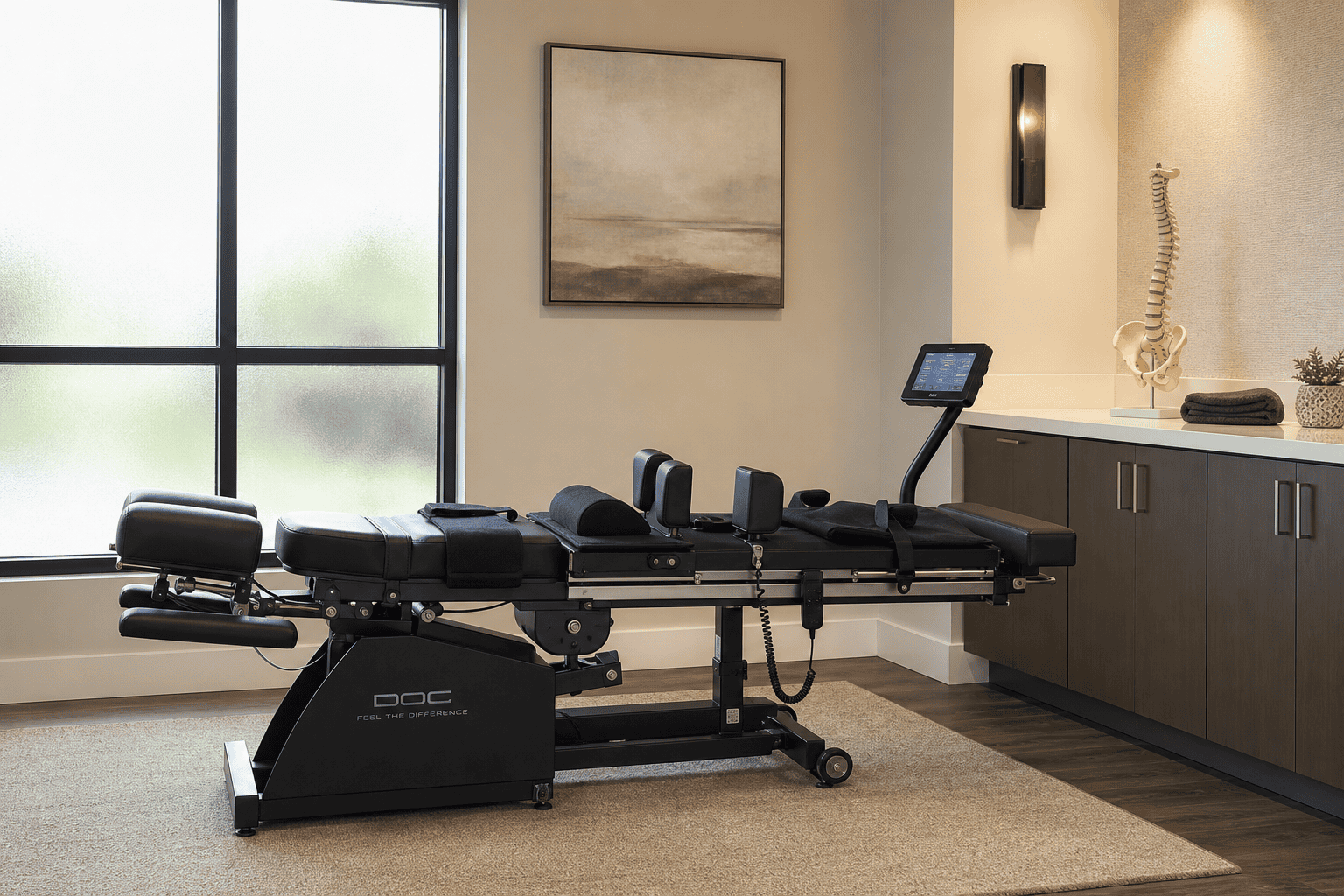
Spinal decompression is different. It reduces pressure inside the disc, which can help draw herniated material away from the irritated nerve while also helping pump fluid and nutrients into the disc to support healing.
So while adjustments can play a helpful supporting role, spinal decompression is the treatment designed to address the disc itself.
It Starts with a Real Exam
At The Spinal Decompression & Chiropractic Center, nobody gets treated before they get evaluated. Dr. B runs through orthopedic tests, neurological testing, and range-of-motion assessment. X-rays are taken when clinically appropriate. The idea is to actually understand what’s happening before touching the spine.
Dr. B’s approach is to put the hay down where the goats can get it — meaning he’ll explain what the imaging shows, what it means for your daily life, and what options make sense for your specific situation. Not a generic protocol. A plan built around your case.
When Chiropractic Is Part of a Bigger Plan
For many herniated disc cases, chiropractic adjustments work best as part of a comprehensive treatment plan rather than a standalone approach. At this clinic, that often includes:
- Spinal decompression therapy — a specialized, table-based therapy that gently distracts the spine to reduce disc pressure and may help retract the herniation
- Cold laser therapy — designed to reduce inflammation and support tissue healing at a cellular level
- Shockwave therapy — used to address surrounding soft tissue and support recovery
- Rehabilitative guidance to help protect the disc as healing progresses
The treatment plan is built around your findings, your lifestyle, and your goals. Patients from Highland Village, Lantana, and The Colony come in for this kind of coordinated care because they’re tired of being handed a single-tool solution to a complex problem.
When Chiropractic Isn’t the Right Answer
This is worth saying plainly: not every herniated disc is a chiropractic case. If there’s significant nerve compression causing progressive muscle weakness, loss of bladder or bowel control, or other red-flag symptoms, surgical evaluation is the appropriate next step — and Dr. B will tell you that directly and get you to the right person.
The clinic has been in Denton since 1998. That kind of longevity comes from being honest with patients about what will and won’t help them, not from telling everyone what they want to hear.
What to Expect if You Come In
Your first visit is primarily about information gathering. The exam takes time. Dr. B will review his findings with you before any treatment is recommended, and you’ll have the chance to ask questions and understand your options.
The clinic is cash-based, which means treatment isn’t filtered through insurance approvals. If you need documentation for potential reimbursement, they can provide a superbill to submit to your insurer.
If it’s a good fit, a care plan gets built around your case and treatment begins that same day. If it’s not, you’ll leave with a clear explanation and a referral to someone who can help.
—
Frequently Asked Questions
Is chiropractic safe for a herniated disc? For most people with a herniated disc, chiropractic care is considered a safe, conservative option — especially when it follows a thorough clinical evaluation. The exam is specifically designed to identify situations where adjustments should be modified or where a different approach is needed. The goal is always to match the treatment to the findings, not apply a one-size-fits-all technique.
How long does it take to feel better? That varies considerably depending on the severity of the herniation, how long it’s been there, your age, activity level, and overall health. Some patients notice meaningful improvement within the first few weeks of care. Others take longer. Dr. B will give you a realistic picture of what to expect based on your specific case — not a promise, but an honest projection.
What’s the difference between a herniated disc and a bulging disc? A bulging disc means the disc wall has weakened and pushed outward in a more diffuse way, but the outer layer is still intact. A herniated disc typically involves a tear in that outer layer, allowing the inner gel to push through. Both can cause pain and nerve irritation, and both may respond to conservative care — but the clinical details matter, which is why the exam comes first.
—
If you’re dealing with disc pain and want to understand what your options actually look like, a conversation is a good place to start. You can reach The Spinal Decompression & Chiropractic Center in Denton to schedule a consultation and get some real answers.